Time for a call to action?
Over 19 months after the COVID-19 pandemic was officially declared by the World Health Organization on the 11th of March 2021, as observed in this comment by D. Cucinotta &
M. Vanelli, we find ourselves living and breathing our ‘new normal’.
Infection-spreading prevention mechanisms like social distancing, mask-wearing, isolation & the strict regulation of movement, working & socializing now define our day-to-day lives, and have been for a while.
So, we adapted. However, while these mechanisms have proven highly effective in controlling the global growth of the pandemic and we may have gotten used to them, that’s not to say they haven’t given rise to concerning psychosocial changes to individuals’ behaviours and mental health states.
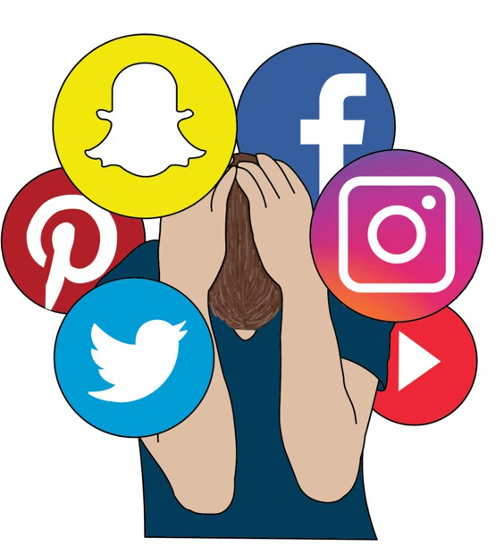
Unfortunately, as much as great attention has been paid to investigating the scientific nature and medical effects of the novel COVID-19 virus to enable befitting global responses to surface, peoples’ physical and mental wellbeing appear to have been placed on the backburner. So, we adapted once again, turning to social media, which quickly presented itself as our lifeline, our coping mechanism. And, naturally, the consequence of finding solace virtually was that, as this consumer study indicates, our social media usage (SMU) increased by an impressive 61%... talk about a steep increase!
Today, as we continue living our pandemic lives under the ‘guiding light’ of social media, we must stop to question what toll the combined effects of COVID-19 and increased SMU is taking on our wellbeing.
Where psychology meets sociology: Psychosocial Transformations
How, then, can we wrap our heads around the phenomenon of the world around us effecting individual changes extending from behaviour to mental health? According to the American Psychological Association’s Dictionary of Psychology, the term ‘psychosocial’ refers to the influence of an interactive relationship between cultural, environmental & social factors on human behaviour and intellect.
This is therefore a merging of sorts between sociology and psychology which lends itself to describing the kinds of changes the combined effects of increased SMU & COVID-19 mechanisms are eliciting, namely psychosocial transformations.
Isolation & Social Restrictions: troubling changes to mental health and behaviour?
With the mechanism of isolation as a response to potential COVID-19 infection being in widespread global use, few have escaped it. However, as much as it is an effective COVID-19 mechanism, isolation may result in feelings of loneliness, stigmatization, abandonment, fear, as well as in a fear for the future symptoms of depression and/or anxiety, as discussed in this scholarly study on the effects of SMU & COVID-19 restrictions during the pandemic. The findings furthermore suggested that, alongside isolation, factors such as restrictions on peoples’ freedom to socialize, working remotely, and uncertainty over economic stability may all operate to result in side-effects grave enough to resemble post-traumatic stress disorder in the long-term, which may indeed be worsened by increased SMU.
Similarly, as this academic exploration into the psychosocial effects of COVID-19 restrictions observed, government-mandated quarantines may commonly give rise to feelings of distress, anxiety, loss of control, as well as mass hysteria & fearmongering. More worryingly, the discussion also suggested that, when prolonged, quarantines can result in more extreme side-effects, such as obsessive-compulsive behaviour, socio-economic distress, depression, despair, insomnia, and even suicide.
It’s no secret that everyone is experiencing some whiplash from having adapted our lives to the new reality. Personally, even as a final-year university student with financial support and living
with my partner, I found myself changing as the pandemic became my reality. I developed symptoms ranging from severe anxiety, stress-induced rashes, panic attacks, heart palpitations, to hypochondria and a constant fear of impending death *yikes*. And socially, I felt myself become more anxious, more awkward in how I communicated, and more paranoid of coming into close contact with people around me. So, little by little, my behaviour, physical, and mental wellbeing changed the more I became accustomed to life during the pandemic.
Social Media Use & Mental Health: coping mechanism or slippery slope?
As a response to the sudden change in personal freedoms & social interactions brought by COVID-19 infection-spreading prevention mechanisms, many people turned to social media, as detailed above. In the earliest stages of the pandemic, social media became an information outlet, with attempts to improve the awareness of the public as to the nature of the virus, how it manifests itself, active cases, new cases, and so on. Soon thereafter, netizens began contributing and spreading related information about the virus & the pandemic on social media. This meant that social media suddenly became plagued by an ‘infodemic’, or an information pandemic as described by this journal article.
Regrettably, however, the infodemic phenomenon may, and extremely often does, result in information overload, misinformation, and mere rumour, all of which may induce or worsen feelings of fear as well as mental health problems, according to this Chinese study on SMU during COVID-19. Beyond this, the study also found that the expression & circulation of negative emotions on social media can result in an effect of ‘emotional contagion’, whereby individuals who are exposed to this may take on the negative emotions they are reading about.
If, like me, you’re an active Instagram, Facebook, Snapchat, etc. user, you’ve more than likely experienced something along these lines since the start of the pandemic. I personally found myself spending more time than usual on Instagram, scrolling through endless posts & stories about pandemic updates, people with severe cases, permanent organ damage… the works. And then, once I became infected with the virus, my anxiety and stress levels shot through the roof and I began experiencing panic attacks, all thanks to the overload of information I’d been digesting for months. Today, although the pandemic information trend has shifted to vaccination/travel/restriction information, it remains a concern as new conspiracy theories, calls for protests, anti-vaccination rhetoric, etc. continue to surface & influence people around the world.
The compounding effect: COVID-19 infection-spreading prevention mechanisms and excessive SMU
As we have seen, the effects of COVID-19 mechanisms on the one hand, and increased SMU on the other, give rise to multifaceted side-effects, with the negative effects extending across social behaviour, physical wellbeing, and mental health. Now, what can be said about the compounding effect of both factors on psychosocial alterations?
According to the previously mentioned Chinese study on SMU during COVID-19, it was found that there was a higher prevalence of anxiety, depression, and combined anxiety and depression (CDA) during the pandemic. Furthermore, this prevalence was noticeably higher for individuals with frequent SMU, indicating a positive correlation between COVID-19 & SMU and deteriorating mental health.
In similar vein, a recent study carried out in Lithuania and Germany on the perceived effects of SMU during mandated quarantine uncovered that this behavioural pattern is prone to give rise to an emotional bond to SMU, ultimately resulting in addictive SMU tendencies.
Furthermore, the study found a positive correlation between excessive SMU during quarantine, and symptoms of stress, anxiety, and depression. The correlation was stronger for quarantined individuals than non-quarantined, indicating an undeniable conclusion to the extent that increased SMU and COVID-19 mechanisms like quarantine or isolation has a significant negative effect on peoples’ wellbeing.
In my experience, whenever a national or local quarantine was imposed where I lived, I found myself picking up my phone more often and spending worrying amounts of time on social media, struggling to stay connected & up to date with the world. However, getting lost in seeing what the people in my ‘Following’ were feeling & getting up to would have me go from happy & content to miserable, anxious, or depressed in a mere 10-15 minutes on the ‘Gram, which is something my friends and family members have also confessed to, confirming the significant & undeniable negative effects SMU gives rise to during COVID-19.
An undeniable need for caution
While SMU during COVID-19 is by no means without its benefits, such as keeping people in isolation connected to their loved ones and the world, serving as an easily accessible means of obtaining updates about the pandemic & the virus, encouraging prevention & safety mechanisms, providing social support content, catering for support & human interaction through social networks, etc., it goes without saying that there is a real risk for the
disadvantages to end up outweighing the benefits of SMU during the pandemic. This is especially true of the concerning psychosocial changes I’ve discussed in this blog.
What, then, is the solution to a problem now so deeply embedded in our daily lives that it seems almost indispensable? How can we respond to the combined dangers of COVID-19 infection-spreading prevention mechanisms and increased SMU?
Now that we’re fully accustomed to life during a pandemic, trends such as home workout challenges, fun activities to do during quarantine, and so on, have all but disappeared, with the pre-COVID-19 social media trends reclaiming their rightful place. Sure, pandemic misinformation, theories and opinions have remained, but the initial social support has not.
Without the feeling that we’re all in this together & there for each other, feeds are back to their over-edited, perfect life, unrealistic expectations pictures they were oversaturated by before, which emphasises an even stronger need to address the positive correlation between the compounding effect of excessive SMU and COVID-19 mechanisms.
Therefore, according to advice by assistant professor of Clinical Psychiatry, J. Tyler, PsyD, in this medical blog post by Penn Medicine, we need to encourage more time off from social media to be present in our daily lives. Nonetheless, beyond individual efforts to reduce SMU during COVID-19, this Italian study on the dangers of excessive SMU suggests that governmental policies to better address deteriorating mental health should be devised, and investments should be made towards mental health clinicians, mental health clinics, and generally in fostering more social support.
On an ending note, I can irrevocably confirm that I’ve noticed a positive change in my mental health as soon as I decreased my daily SMU. Difficult times as these may be, there’s always a silver lining, and it’s as easy as moderate self-control or seeking support… your sanity will thank you for it!